
It describes anatomy
The term describes the amount of functional meniscal tissue in the knee. It does not, by itself, explain someone’s symptoms.

Patient information
The meniscus is an important part of how the knee cushions and distributes load. Caeruleum is developing LunaFlex, a synthetic meniscal replacement system for the meniscus-deficient knee.
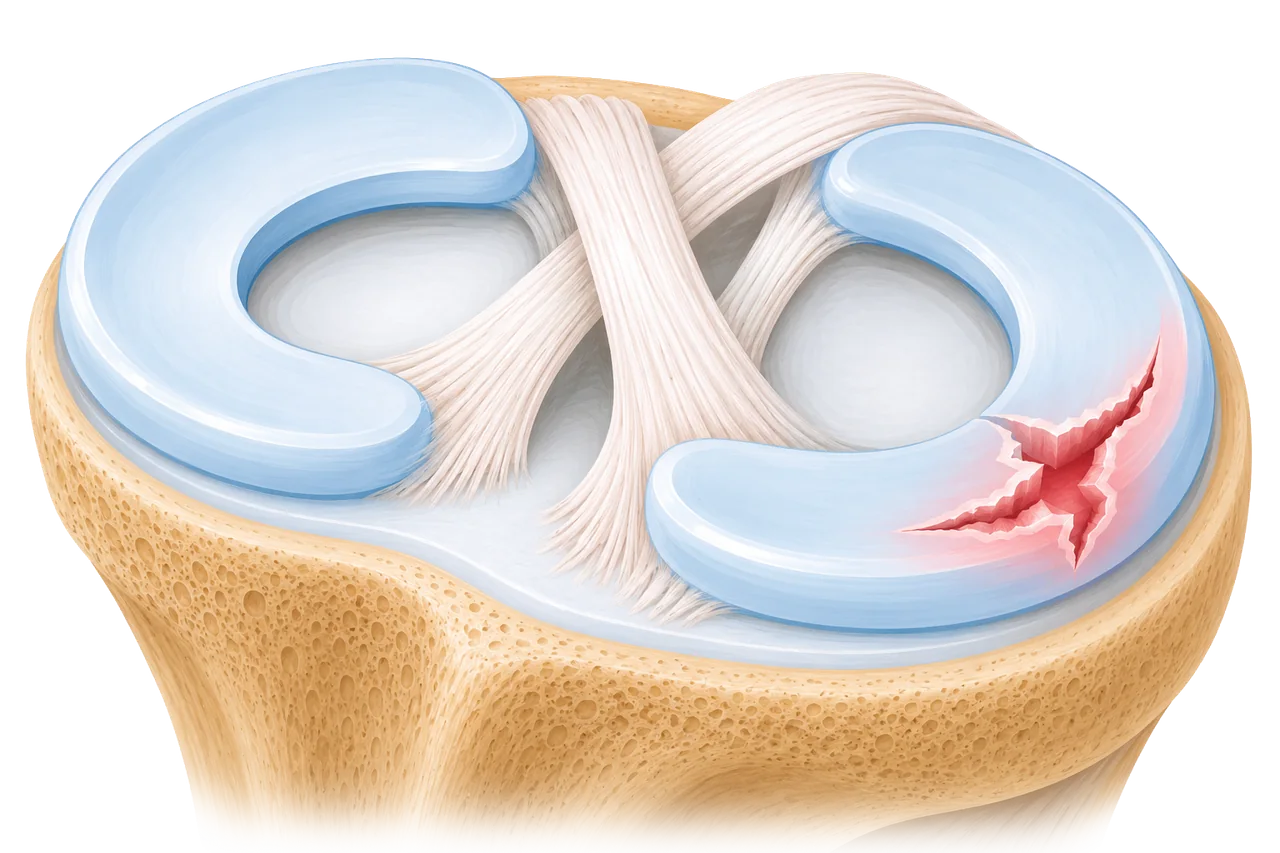
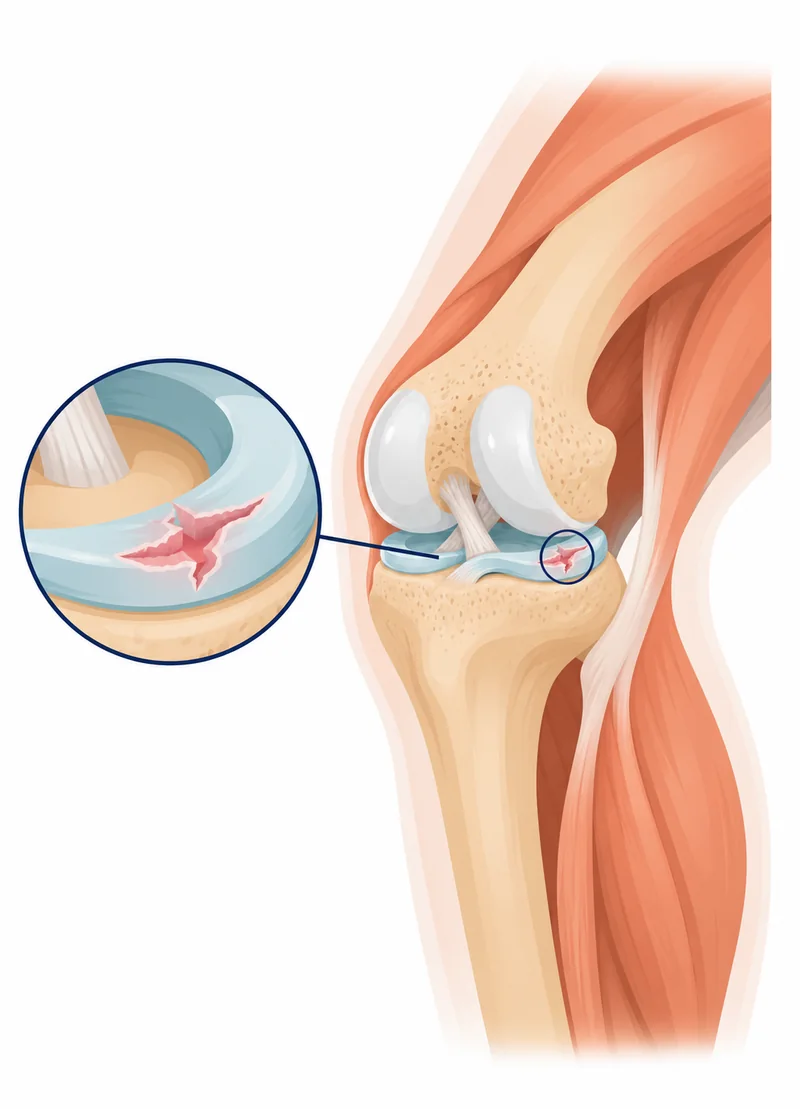
The knee in plain language
Each knee has two menisci: firm, flexible pads of tissue between the thighbone and shinbone.
They help cushion the joint, distribute weight across the cartilage, and contribute to stability. A meniscal injury can happen suddenly or develop over time, and the symptoms and care needs differ from person to person.
A licensed healthcare professional can evaluate an individual knee and explain the care options that may be appropriate.
General education: AAOS OrthoInfo and MedlinePlus.
A useful term, carefully defined
A meniscus-deficient knee is one in which some or all functional meniscal tissue is absent.
The term describes the amount of functional meniscal tissue in the knee. It does not, by itself, explain someone’s symptoms.
Caeruleum uses the term to describe the development focus for LunaFlex — not to identify, screen, or advise individual patients.
The LunaFlex program
LunaFlex is a preclinical synthetic meniscal replacement system. The program brings together three connected design concepts.
A fiber-reinforced, crescent-shaped implant is being engineered to occupy the space left by missing meniscal tissue.
Central and peripheral fixation features are being developed as one system with the implant body.
Software is intended to support implant planning from pre-operative imaging.
These are design features and development objectives, not established clinical benefits.
Explore the LunaFlex platformToday’s status
The work is preclinical. No treatment is being offered through this website.
Caeruleum is not evaluating individual cases, screening patients, or enrolling participants. Any future clinical research would require the appropriate regulatory and ethics review before recruitment could begin.
Learn about investigational-device safeguards in the FDA’s IDE FAQs.
Common questions
These answers describe the development program. They are not medical advice.
LunaFlex is a synthetic meniscal replacement system in preclinical development for the meniscus-deficient knee. It is a device-development program, not an available treatment.
Preclinical development includes design and testing work performed before any potential clinical investigation in people. Preclinical work does not establish that a device is safe or effective for patients.
No. LunaFlex has not received FDA clearance or approval and is not available for clinical use or sale. Its safety and effectiveness have not been established.
The development focus is the meniscus-deficient knee. Final indications, if any, would depend on future testing and regulatory review. Caeruleum is not using this website to determine whether a product in development may be appropriate for an individual.
No. Caeruleum is not recruiting, enrolling, or screening patients through this website. Nothing here is an offer of treatment or an invitation to participate in research.
Please speak with a licensed healthcare professional. Caeruleum cannot diagnose a condition, recommend treatment, interpret imaging, or advise whether a product in development may be appropriate for an individual.
For technical readers