
LunaFIT Meniscal Body
A fiber-reinforced, load-bearing composite engineered to mimic the biomechanics of native meniscal tissue under multi-axial loading.


The LunaFlex Meniscus
Fiber-reinforced, patient-matched, and built to stay in the joint.
The gap
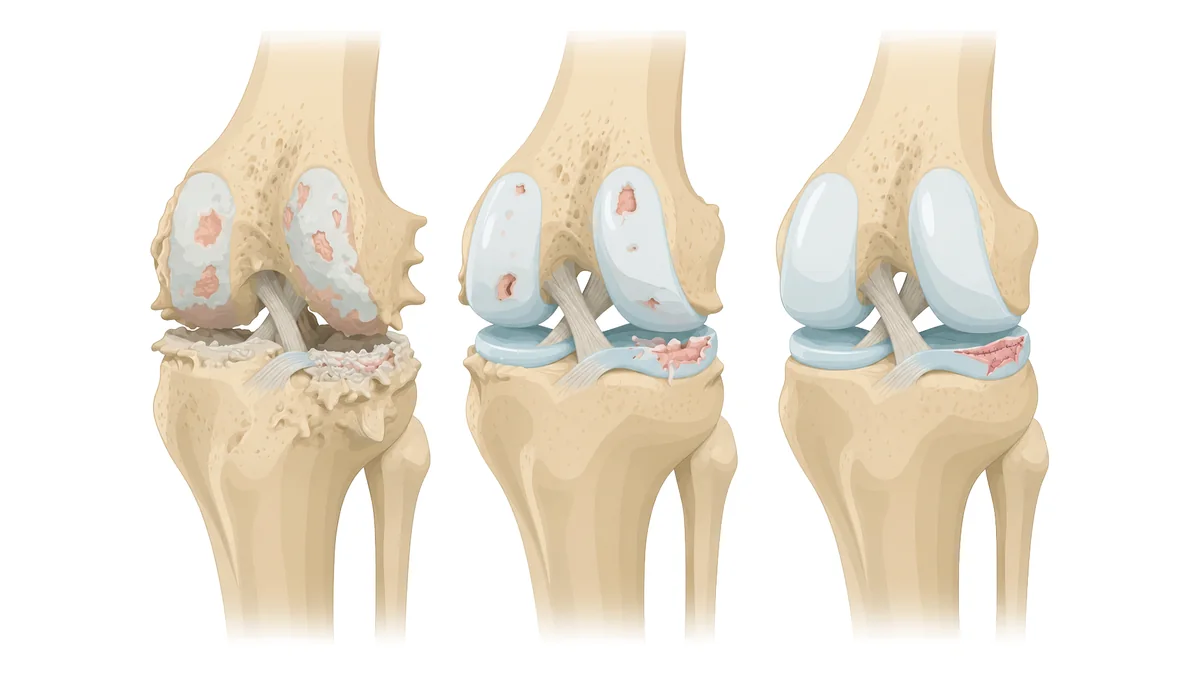
LunaFlex is being developed for the meniscus-deficient knee — patients whose meniscal tissue cannot be repaired or has already been removed, and whose remaining options are resection, allograft transplant, or waiting for a knee replacement.
That leaves a large group of people with a joint that still works but is no longer protected, and a treatment ladder whose next rung is arthroplasty. LunaFlex is designed to sit between those two points.
The platform
A fiber-reinforced, load-bearing composite engineered to mimic the biomechanics of native meniscal tissue under multi-axial loading.
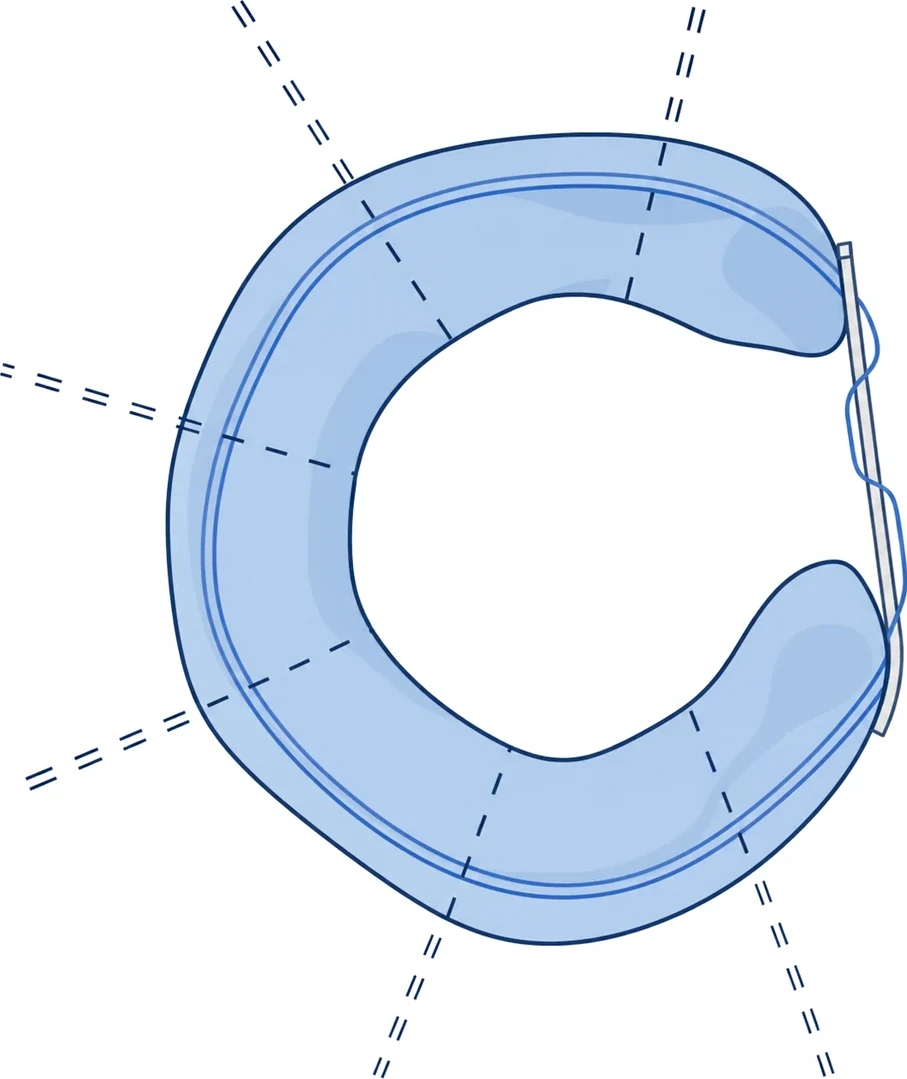
A bridge fixed centrally to the tibia, combined with circumferential reinforcement and edge sutures for hoop strength and implant stability.
Intended to convert a patient's pre-operative imaging into the implant configuration for that individual knee, sized and planned in advance.
Design concept
A fiber-reinforced composite rather than a molded solid, carrying reinforcement in every direction so it behaves predictably under load from any angle.
Engineered to distribute compressive force across the tibial plateau and to hold its shape under the combined compression and rotation of the knee.
A central attachment to the tibia resists migration, while peripheral sutures into the joint capsule let the implant move together with the knee.
Designed to be patient-matched rather than fitted from a fixed set of sizes, with its geometry taken from that patient's own pre-operative imaging.
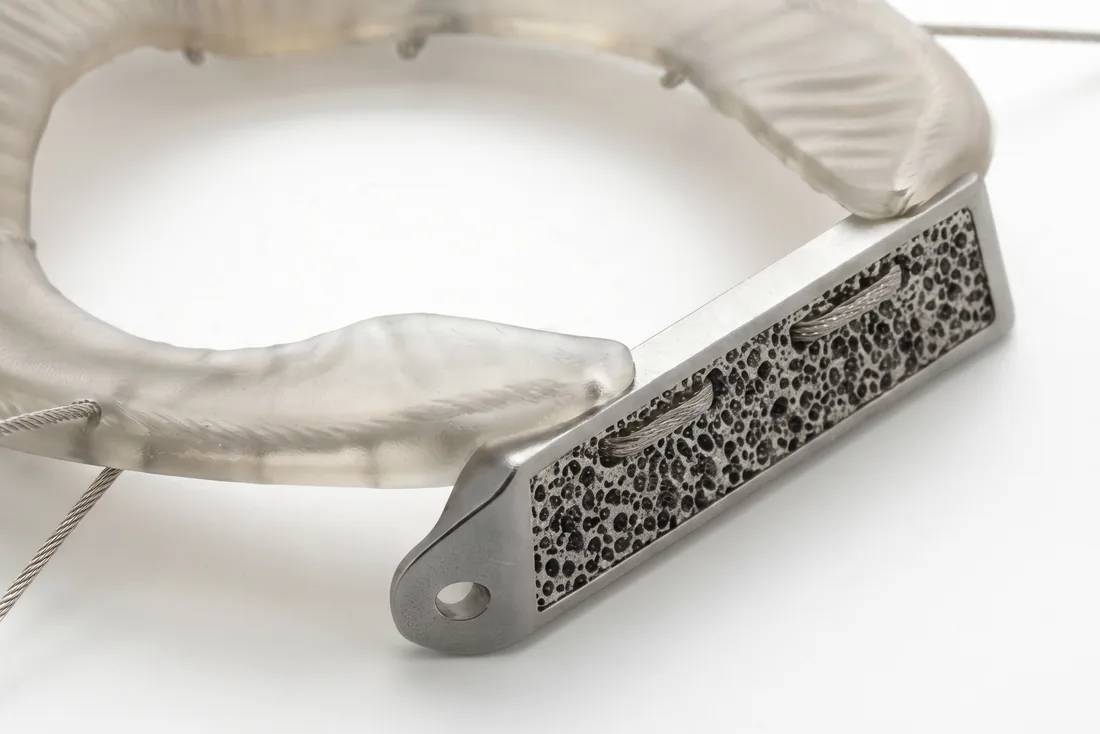
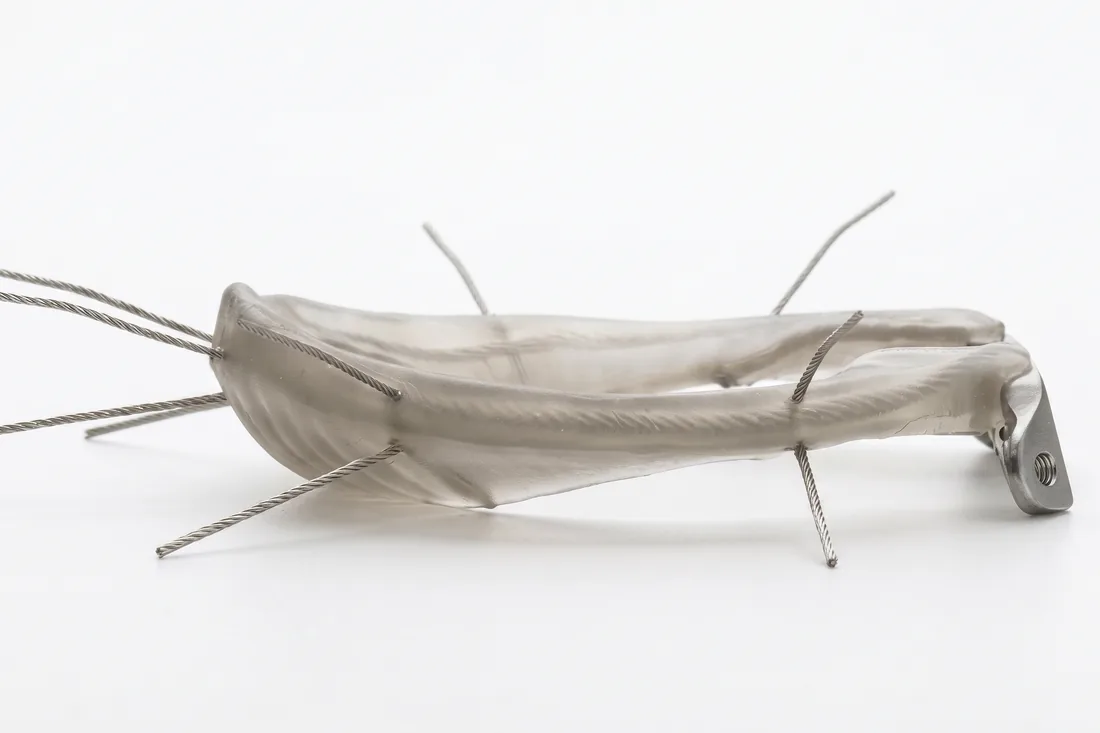
Design intent, not performance data. LunaFlex has not been evaluated by the FDA and no clinical claims are made or implied.