

About us
A device company built around one unsolved problem.
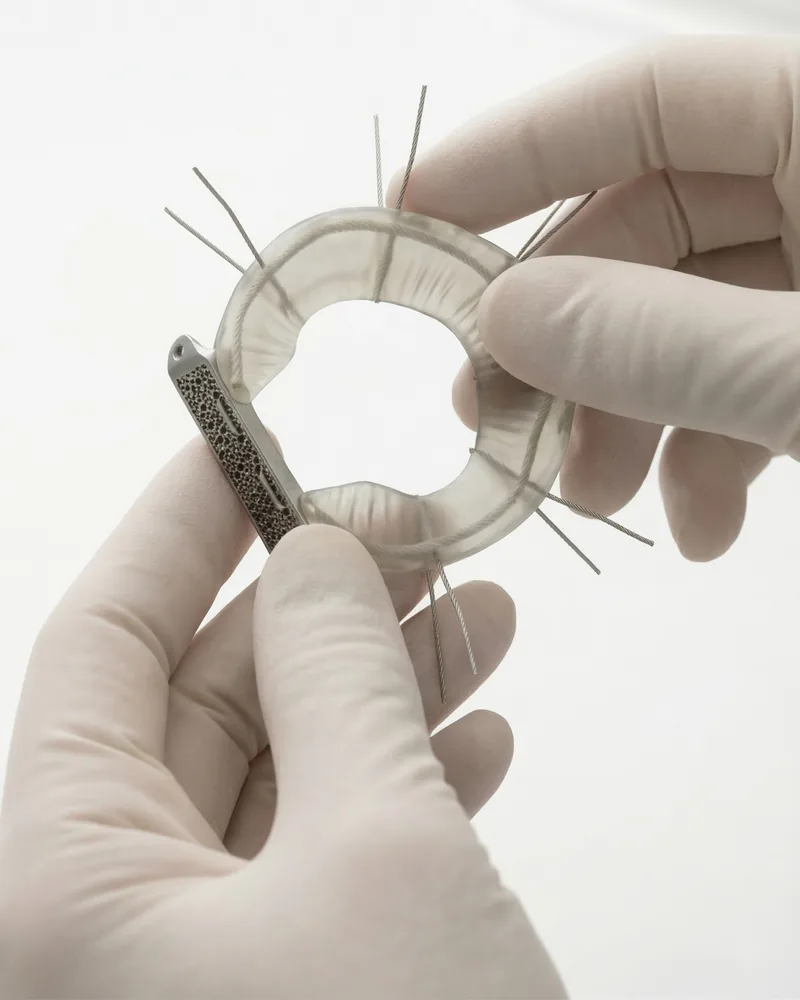
Caeruleum Biotechnologies, INC. is a preclinical orthopedic medical device company. The LunaFlex Meniscus is designed to restore physiologic load distribution across the tibiofemoral joint, to mitigate progression to post-traumatic osteoarthritis, and to give the joint a durable mechanical solution measured in decades rather than years.
Origin
The design came first. The company followed.
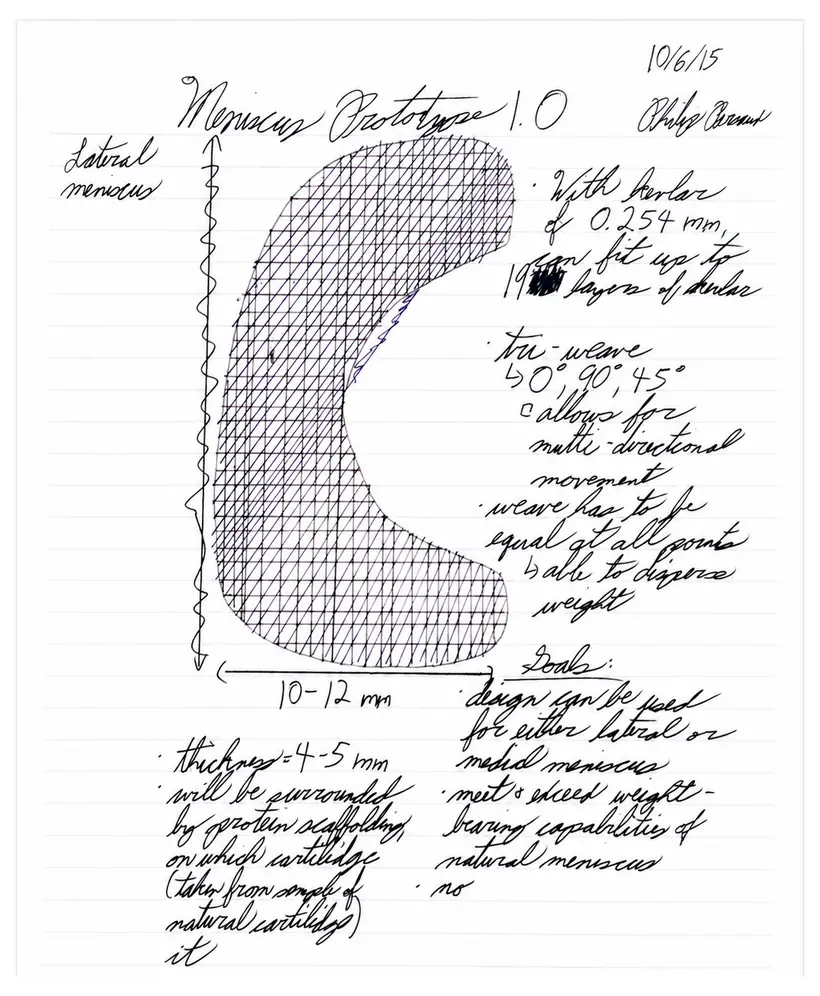
The first sketch is dated 6 October 2015. The application was filed in January 2017 and granted as US Patent 11,147,677, “Artificial meniscus” on 19 October 2021, naming Philip A. Persaud as inventor. Caeruleum Biotechnologies was formed in 2022 to build the platform around it.
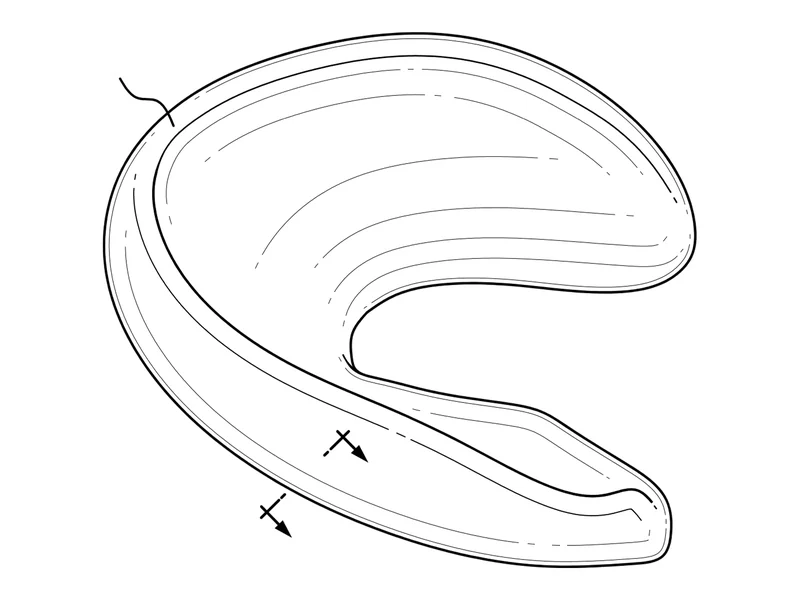
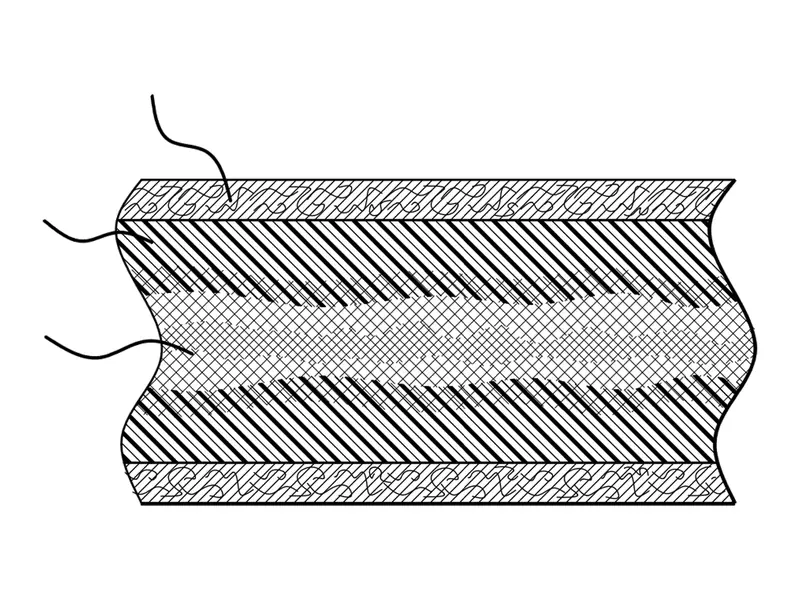
The claims describe the fiber-reinforced composite meniscus and the bioresorbable scaffold that encases it. A further provisional application was filed in April 2026, extending the estate to the fixation system.
An issued patent is a public document, and anyone evaluating the program can read the claims in full — we would encourage it.
Why now
Three decades defined the device. The last three years defined the timing.
The design problem is old. What has changed recently is the ground it lands on.
Regulatory clarity
A 2023 FDA advisory panel set out what a meniscal implant of this class has to demonstrate. The path we would otherwise have had to define ourselves is now marked.
Materials maturity
The materials the design depends on carry established safety histories and are in production today — no novel-material risk, and no supply chain to invent.
Payer pressure
Published evidence on the efficacy of arthroscopic partial meniscectomy has moved payers toward joint-preserving alternatives. Demand is forming ahead of supply.
FDA Orthopaedic and Rehabilitation Devices Panel, 2023 · Sihvonen et al., FIDELITY, NEJM.
Next
If the thesis holds up, the detail is worth your time.
Investors, corporate development teams, and surgeons interested in the clinical advisory board can request the deck and executive summary directly.